Introduction
Healthtech companies in 2026 face a compounding challenge: regulatory obligations are growing more demanding at exactly the moment when the technical talent needed to meet them is hardest to find.
The connection is direct. Updated HIPAA Security Rule requirements, FDA guidance on AI-enabled medical devices, and the 21st Century Cures Act's interoperability mandates don't just create legal exposure — they dictate what systems must be built, what documentation must exist, and what qualifications the people building those systems need to hold.
Healthcare data breaches now cost an average of $10.93 million per incident, the highest of any industry. Penalties for information blocking reach $1 million per violation. For healthtech leaders, both figures represent real operational exposure.
This article covers the key regulations shaping healthtech compliance in 2026, how technology is helping organizations keep up, and how these regulatory pressures are translating into specific hiring demands — including which roles are most in demand and why they're so difficult to fill.
Key Takeaways
- HIPAA's proposed 2026 Security Rule updates eliminate compliance flexibility: encryption, MFA, and network segmentation all become mandatory, including encryption, MFA, and network segmentation
- FDA AI device authorizations hit 1,451 cumulative by end of 2025, creating sustained demand for regulatory affairs and AI compliance roles
- The 21st Century Cures Act requires FHIR R4-based APIs — non-compliance carries up to $1M per violation in penalties
- Compliance automation tools are growing at 19.7% CAGR; qualified professionals to run them remain in short supply
- Cybersecurity roles sit at a 74% supply/demand ratio nationally — healthtech's specialized requirements make the gap even wider
Key Healthtech Regulations Defining Compliance in 2026
The U.S. healthtech regulatory landscape in 2026 is shaped by overlapping federal laws, agency-level guidance, and state privacy requirements, each carrying distinct obligations for technology teams.
Strengthened HIPAA Security Rule Requirements
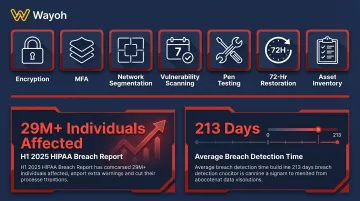
HHS published its HIPAA Security Rule NPRM on January 6, 2025, with a final rule expected around May 2026. The core shift: the "addressable vs. required" distinction is gone. Every safeguard becomes mandatory.
Key proposed requirements:
| Requirement | Specifics |
|---|---|
| ePHI encryption | Mandatory at rest and in transit |
| Vulnerability scanning | Every 6 months |
| Penetration testing | Every 12 months |
| Multi-factor authentication | Required for all relevant technology assets |
| Network segmentation | Mandated to limit lateral breach spread |
| Data restoration | Written procedures to restore within 72 hours |
| Asset inventory | Full technology asset inventory revised annually |
HHS estimates $9 billion in first-year implementation costs for regulated entities, reflecting both the scale of required changes and the specialized workforce needed to execute them.
The numbers make the case: over 29 million individuals were affected by healthcare data breaches in the first half of 2025 alone, and breaches take an average of 213 days to detect. These figures explain why HHS moved from voluntary guidance to mandatory controls.
FDA Guidelines for AI-Enabled Medical Devices and SaMD
The FDA's Software as a Medical Device (SaMD) framework now governs a fast-growing category of AI tools embedded in diagnostic, monitoring, and clinical decision-support workflows. By end of 2025, the FDA had authorized 1,451 cumulative AI/ML-enabled devices — 295 in 2025 alone.
The FDA's current approach centers on a "total product lifecycle" model: compliance runs as an ongoing obligation, not a one-time pre-market review. Key elements include:
- Predetermined Change Control Plans (PCCPs): Final guidance issued December 2024 allows manufacturers to plan AI model updates without new submissions for each change
- Lifecycle Management Draft Guidance: Published January 2025, covering documentation, bias prevention, and post-market monitoring
- Transparency Principles: Published June 2024, establishing expectations for explainability in AI/ML devices
These requirements create sustained workload for engineering and regulatory teams: documentation, change management, and monitoring infrastructure must all be in place and maintained continuously.
21st Century Cures Act, Interoperability, and Privacy Obligations
The ONC's implementation of the 21st Century Cures Act created enforceable information blocking prohibitions. Health IT developers that interfere with the exchange of electronic health information face penalties of up to $1 million per violation.
Compliance requirements include:
- FHIR R4-based APIs: Required under ONC certification criteria (§170.315(g)(10))
- TEFCA participation: QHINs began operating in December 2023; data exchange is live and expanding
- USCDI standards: Draft USCDI v5 published in 2024, expanding the core data set
HITECH keeps business associate accountability in force. MACRA continues to tie health IT adoption to quality payment incentives for providers.
State and international privacy laws add another layer. For companies handling EU patient data, GDPR classifies health data as special category data, requiring explicit consent, 72-hour breach notification, and strict data minimization. California's CPRA raised intentional violation penalties to $7,988 per violation in 2025, and Washington's My Health My Data Act extends protections to consumer health data outside HIPAA's scope.
Many direct-to-consumer healthtech companies have been caught off-guard by these obligations, having assumed HIPAA coverage was sufficient.
How Technology Is Helping Healthtech Companies Stay Compliant
Manual compliance processes can't scale to meet 2026's regulatory demands. Technology has matured enough to address that gap directly — embedding controls into the infrastructure healthtech teams already use rather than bolting on fixes after the fact.
Built-In Controls and Automated Monitoring
Modern EHR platforms and cloud-based health IT infrastructure now embed compliance controls natively:
- Audit logging and unique user ID management
- Access controls and role-based permissions
- Encryption at rest and in transit
- Configurable compliance frameworks that reduce the need to build safeguards from scratch
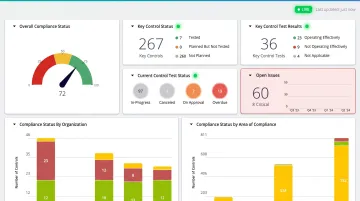
Alongside this, AI-powered compliance monitoring tools enable real-time detection of unusual access patterns, potential HIPAA violations, and data anomalies. The compliance automation tools market is projected to grow at 19.7% CAGR from 2025 to 2030, driven by regulatory complexity and cloud-first deployment. Vendors like Drata, OneTrust GRC, and AuditBoard are seeing strong adoption across healthtech.
Cybersecurity Controls Now Moving to Mandatory
The updated HIPAA NPRM codifies what were previously best practices into explicit requirements:
- MFA across all relevant technology assets
- Network segmentation to contain breach spread
- Automated vulnerability scanning on a 6-month cadence
- Penetration testing annually at minimum
These aren't optional anymore. Organizations that treated them as aspirational now have a compliance deadline to work toward. Meeting that deadline also means having the right technical talent in place — which is where compliance tooling and hiring strategy intersect.
Compliance Management Platforms and Explainable AI
Compliance management platforms (IBM OpenPages, MetricStream, Archer GRC) help organizations map specific regulatory requirements to technical controls and generate audit-ready documentation. For teams managing overlapping HIPAA, FDA SaMD, and Cures Act obligations simultaneously, that systematic mapping separates confident compliance from guesswork.
For FDA-regulated AI tools specifically, explainable AI and model documentation capabilities are increasingly critical. Clinical decision-support software must be auditable — the FDA's transparency guidelines published in June 2024 set explicit expectations. SaMD developers now need tooling that handles model versioning, bias documentation, and change logs as a baseline — and the engineers who can implement and maintain that infrastructure are among the most in-demand hires in healthtech right now.
How Healthtech Regulations Are Reshaping Technology Hiring Trends
Every regulatory requirement creates a capability gap that must be filled by skilled people. These compliance mandates aren't just legal obligations — they're workforce planning signals.
Healthcare Cybersecurity Engineers and Security Architects
HIPAA's proposed mandatory controls are driving demand for security professionals who understand ePHI environments specifically. These aren't general security hires — they need working knowledge of:
- HIPAA Security Rule technical safeguards
- NIST healthcare-specific frameworks
- Healthcare threat models (ransomware targeting clinical systems, medical device vulnerabilities)
- Encryption requirements for data in transit and at rest
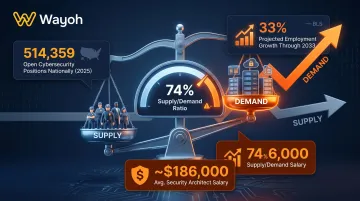
The supply problem is severe. CyberSeek reports 514,359 open cybersecurity positions nationally in 2025, with only a 74% supply/demand ratio. BLS projects 33% employment growth in information security through 2033 — demand is outrunning supply pipeline by a wide margin. Security architects average approximately $186,000 nationally; healthcare-specific roles with dual HIPAA competency command premiums above that.
Regulatory Affairs Engineers and AI Compliance Specialists
The FDA's SaMD guidance has created a genuinely new role category: professionals who can bridge ML model development and FDA submission requirements. To do this job, you need to understand both how transformer models behave under distribution shift and what a PCCP submission needs to contain.
That combination is rare. Regulatory Affairs Specialists in markets like Boston average $111,021, and specialists who can also navigate PCCP documentation and bias prevention requirements sit above that. With 295 new AI device authorizations in 2025 alone, demand for this profile is accelerating.
FHIR/Interoperability Developers
The Cures Act's API mandates have made FHIR R4 expertise a baseline hiring criterion for any healthtech platform working with health systems or payers. Indeed currently lists 238 active HL7 FHIR integration developer roles — a concrete indicator of market demand.
These developers must understand both the technical FHIR specification and ONC certification requirements well enough to build compliant integrations. The TEFCA network going live makes this even more pressing for organizations pursuing broad health data exchange.
Cross-Functional Compliance and Governance Roles
Chief Privacy Officers, Health Data Governance Leads, and AI Ethics Officers are increasingly required to be technically fluent — not just policy-literate. These roles need candidates who operate across law, technology, and clinical operations simultaneously.
The candidate profile is genuinely scarce. A single hire needs to cover ground that typically spans three separate disciplines:
- Regulatory and privacy law (GDPR Article 9, HIPAA, state-level health data statutes)
- ML model documentation and AI governance frameworks
- Clinical operations context to assess real-world risk
That breadth makes sourcing these roles a challenge even for well-resourced hiring teams.
Wayoh specializes in exactly this kind of cross-functional hiring across compliance, risk, and legal functions in regulated industries — including healthtech — guided by a human-first recruiting approach, with active search activity in New York, California, and Florida, where healthtech hiring is most concentrated.
The Most In-Demand Healthtech Tech Roles in 2026
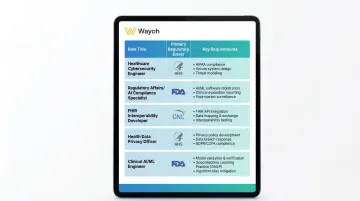
| Role | Primary Regulatory Driver | Key Requirements |
|---|---|---|
| Healthcare Cybersecurity Engineer | HIPAA Security Rule updates | ePHI encryption, NIST frameworks, vulnerability management |
| Regulatory Affairs Engineer / AI Compliance Specialist | FDA SaMD / PCCP guidance | ML model documentation, bias assessment, FDA submission experience |
| FHIR / Interoperability Developer | 21st Century Cures Act | FHIR R4, ONC certification, TEFCA integration |
| Health Data Privacy Officer | HIPAA + GDPR + CPRA | Cross-framework privacy governance, breach notification, data minimization |
| Clinical AI/ML Engineer (Compliance Background) | FDA AI lifecycle guidance | Model versioning, transparency documentation, post-market monitoring |
The common thread across all five: candidates must understand regulated environments, not just the technical skills in isolation. An ML engineer without FDA oversight experience is a compliance liability the moment they touch a SaMD product.
The talent supply for these profiles is far outpaced by demand. Roles requiring both technical depth and regulatory literacy carry some of the longest time-to-hire in the healthtech market — particularly at mid-senior levels, where most qualified candidates are already employed and not actively looking. That passive talent pool is exactly where relationship-led recruiting has the clearest advantage.
Challenges Healthtech Companies Face in Hiring Compliant Tech Talent
The core structural problem: most software engineers and data scientists don't have healthcare compliance backgrounds, and most compliance professionals can't evaluate or build modern health IT systems. Neither population crosses into the other naturally.
This creates three practical hiring obstacles:
- Narrow candidate pipelines. The intersection of technical depth and regulatory literacy is small. Traditional sourcing — job boards, applicant tracking — surfaces candidates with one side of the equation, rarely both.
- Rapidly shifting job requirements. New FDA AI guidance, HIPAA NPRM finalization, and expanding state privacy laws mean job descriptions become outdated quickly. Many organizations don't know exactly what they need until a compliance deadline is close, so proactive hiring stalls.
- Interview evaluation gaps. Technical interviewers often can't assess HIPAA fluency. Compliance leads often can't evaluate engineering competency. Without someone who understands both, screening breaks down.
Wayoh's approach to this challenge is built on relationships rather than databases. The best compliance-literate technology talent in healthtech is rarely applying to posted roles. They're already employed, and reaching them requires direct outreach built on established networks — not keyword searches.
Wayoh also offers interim and contract solutions alongside permanent placements. An approaching HIPAA enforcement date or FDA submission timeline can't wait for a 4-month permanent search. Vetted interim professionals can step into regulatory or security roles immediately, providing risk coverage while a permanent hire is in process.
With 10+ years placing compliance, risk, and technology professionals and 500+ placements completed, Wayoh's networks consistently surface candidates that internal sourcing misses. That reach matters most in the healthtech compliance-technology intersection, where the qualified talent pool is genuinely narrow.
Frequently Asked Questions
What are 5 regulations that impact healthcare practices?
The five most impactful are HIPAA (patient data privacy), the HITECH Act (extending HIPAA to business associates), the 21st Century Cures Act (interoperability and information blocking), FDA SaMD/cybersecurity guidelines (AI-enabled devices and software), and GDPR (EU patient data). Each carries distinct technical and organizational compliance obligations.
How do you ensure compliance with healthcare regulations?
Compliance requires four pillars: technical controls (encryption, MFA, audit logging), regular risk assessments and vulnerability scans, staff training on applicable regulations, and engaging technology and legal professionals with direct experience in your specific regulatory frameworks.
How can technology help with compliance?
Technology supports compliance through several layers:
- Automated monitoring that flags HIPAA violations and unusual access patterns in real time
- EHR and cloud platforms with built-in ePHI safeguards
- Cybersecurity tooling including MFA, network segmentation, and vulnerability scanning
- Compliance management software that maps requirements to controls and generates audit-ready documentation
What are the 7 elements of healthcare compliance?
The OIG's seven elements are: written policies and procedures, designated compliance leadership, effective training and education, open lines of communication, internal monitoring and auditing, disciplinary standards for violations, and prompt response to detected problems. These apply to both covered entities and their business associates.
How is technology impacting healthcare?
Technology is improving care through AI diagnostics, EHR interoperability, and telemedicine while simultaneously creating new regulatory obligations around data security, algorithmic accountability, and patient data rights. Healthtech organizations therefore need technology professionals who can build compliant systems from the ground up — satisfying FDA, HIPAA, and interoperability requirements, not just functional specs.